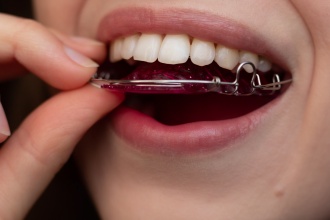
You might wear retainers or aligners daily. Or, you may put one in your mouth before bed. And even if you no longer wear a retainer, you might remember having one as a child, or your orthodontist recommending an expander before you got your braces.
Retainers and other aligners play an important role in helping to straighten teeth. Other oral appliances, like mouthguards, can help protect our teeth. But you might notice that your oral appliances, particularly retainers, can sometimes feel uncomfortable or cause tooth or gum pain.
We’re going to discuss some of the possible reasons for tooth pain from retainers. We’ll differentiate between expected discomfort and abnormal pain or toothaches and how to get relief. Plus, we will help answer whether retainer pain can contribute to canker sores… and whether you should keep wearing a retainer when you have a canker sore.
Do Retainers Hurt?
Retainers and aligners can cause pain and discomfort especially when you first wear them, often because of the tightness. This might also occur if you start wearing your retainers or aligners again after not having worn them for an extended period of time.
It is not uncommon to feel tightness and slight pain lasting several days or up to a week when you begin wearing a retainer or get braces for the first time. Generally, though, this pain should subside after that timeframe. You should consult your dentist or oral health professional if you experience pain from your retainers or aligners lasting longer than a week.
Why Your Teeth Might Be Sore from Your Retainer
We established that some initial pain and discomfort is to be expected when you first begin wearing your retainer. However, other factors might cause pain from your retainer or aligner. These might include:
- Your Teeth Are Shifting: Retainers and aligners work to help straighten teeth. That process can take time. So, if you experience occasional tooth pain when wearing your retainer, your teeth might be shifting around. Similarly, if you haven’t worn your retainer or aligner in a while, your teeth may have shifted back to their original position – which may result in discomfort especially if the retainer or aligner no longer fits. Speaking of fit…
- Your Retainer Doesn’t Fit Anymore: Shifting teeth may cause fit issues. That also applies if you wear your retainer regularly. Plus, frequent wear can also cause retainers and aligners to feel loose. Poor-fitting retainers can sometimes lead to sore teeth.
- Your Retainers Are Broken or Damaged: A sharp pain in your mouth – notably your gums – may indicate your retainer has a broken part or wire. Your retainer wires may also bend, and plastic retainers can become distorted if exposed to high heat over a lengthy period.
Again, it’s important to reach out to your dentist if you continue to experience pain from your retainer. While your teeth or gums may feel sore from continued realignment, it’s also possible you need a new retainer if it no longer fits or has become damaged in some way.
How to Soothe Sore Teeth from Retainer

If you’re feeling discomfort or sore teeth when wearing your retainer, you likely want to find some ways to help reduce the pain. Try the following strategies:
- Eat Soft or Cold Foods: Eating soft, cold foods can help to ease tooth pain from retainers or other oral health issues. So, you might consider eating some apple sauce or yogurt as a midday snack. The occasional bowl of ice cream might also serve as a pick-me-up that can help with pain from retainers!
- Cold Compresses: You might not enjoy cold foods or get enough sustenance in your diet from just cold and soft foods. In that case, try a cold compress. You can hold an ice pack or cold cloth to affected areas to help soothe sore teeth or gums.
- Saltwater Gargle: Are your retainers causing gum pain? Try a saltwater gargle: it can help reduce gum inflammation – which can help to soothe tooth pain – and also disinfect gums to help limit the chance of future infection.
Consult with your dentist if you have retainer pain but also have tooth sensitivity to cold foods or compresses. They may supply you with a dental wax or numbing gel to help with the pain. Alternatively, try Orajel™ toothache remedies:
Orajel™ toothache remedies include formulas you can use as needed during the day or at night to help provide fast, temporary relief for tooth pain. Regardless of your chosen method, staying consistent and being gentle on your teeth and gums is a good rule of thumb when trying to limit pain from your retainer or aligner.
Can Retainers Cause Canker Sores?
Yes, retainers may cause canker sores. While the exact cause for canker sores is unknown, they may form because of mouth injuries or dental work – both of which could be applicable when wearing your retainer or getting it installed.
Wearing your retainer or aligner for the first time, or continuing to wear a damaged or poorly-fitting retainer, may result in abrasions to your gums, cheeks, or tongue. Canker sores often develop along the gumline or inside the cheeks, so if your retainer is causing gum pain, check to see if a canker sore is the culprit.
In the event you have a canker sore from your retainer, you can use Orajel™ mouth sore gels and rinses for fast topical pain relief:
- Orajel™ 3X Medicated For All Mouth Sores Gel offers instant relief from mouth sore pain from canker sores, cold sores, and gum irritation. It includes 20 percent Benzocaine to help relieve oral pain, plus Menthol to soothe gums and Astringent to help protect sores from irritation. Apply the gel directly to sores on your lips, gums, or cheeks.
- Orajel™ For All Mouth Sores Antiseptic Rinse helps kill bacteria and promote healing of sores in the mouth. It has a soothing mint taste and can help relieve pain from canker sores in your mouth, whether on your lips, cheeks, or gums.
- Orajel™ Alcohol-Free For All Mouth Sores Antiseptic Mouth Rinse also helps kill bacteria and promote healing of mouth sores while easing gum irritation and soothing cheek bites, providing necessary pain relief from canker sores and more.
It’s possible a dirty retainer or aligner may contribute to the formation of a dental abscess, so you want to be vigilant when cleaning your retainers. And be sure to consult your dentist or oral health professional if you’re unsure about whether you have a mouth ulcer or dental abscess.
Should I Wear My Retainer if I Have a Canker Sore?
You should not continue wearing your retainer if you have a canker sore and it is irritating the sore – particularly if it feels like your retainer is cutting your gums. Turn to Orajel™ mouth sore gels and rinses for pain relief until the canker sore has healed, then you may resume wearing your retainer or aligner.
Orajel™ Provides Solutions for Tooth Pain from Retainers
Wearing your retainers regularly is an important part of maintaining proper tooth alignment and oral health. But in the event you experience tooth pain or develop a canker sore from wearing your retainer, turn to Orajel™ creams, gels, and rinses for relief. Clean your retainers regularly and inspect them for any loose-fitting or damaged parts – and consult with your dentist if any issues develop.
Disclaimer: Only put Orajel™ creams or gels around the gums. Do not put inside any cavity or open wound site.
